REALM & RUNE: Sigils of the Past and Present [REINO E RUNAS]
Durante nossa jornada em Blue Prince, encontraremos uma grande quantidade de livros. Muitos deles contêm pistas importantes — em alguns casos, para compreendê-las, é preciso entender inglês e seus trocadilhos. Ainda assim, isso não nos impede de apreciar as histórias por trás desses livros. Por isso, resolvi traduzir todos eles, para que todos possam aproveitar dessa experiência.
Atenção: não continue a leitura se não quiser spoilers!
“Se este conteúdo foi útil para você, nos ajude se inscrevendo no nosso YouTube e/ou Instagram: @Euprofessor e @Eu.professor.”
TEXTO TRADUZIDO
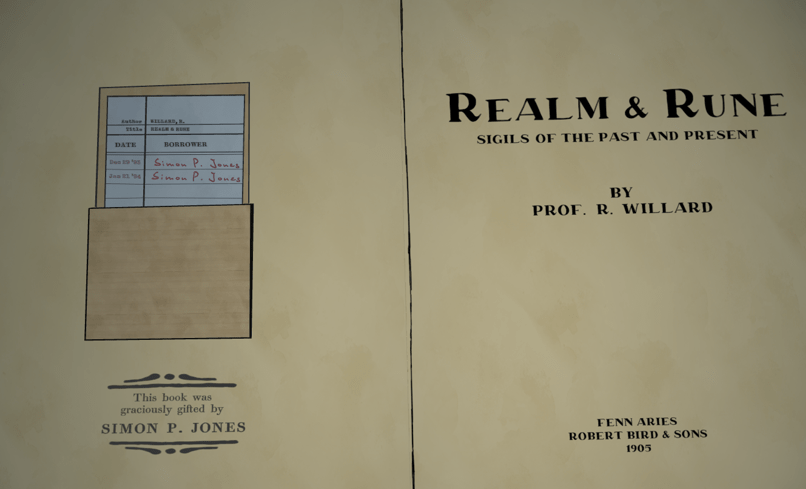
REALM & RUNE
Sigils of the Past and Present
By
Prof. R. Willard
INTRODUÇÃO
Quando os estudiosos da primeira era encontravam qualquer coisa oculta, seja de origem natural ou fruto das criações humanas, era costume registrá-las por meio de diversos sinais com a ajuda de figuras. Eles faziam isso para que os sigilos de seu reino não fossem compreendidos por forasteiros.
Historicamente, os sigilos não são uma tradição nova. Eles foram encontrados em todas as eras e culturas, antecedendo tanto a escrita quanto as artes heráldicas. Contudo, hoje, quando usamos o termo “sigilo”, estamos nos referindo especificamente aos Sigilos de Reinos, aqueles rudes símbolos circulares de designação encontrados em artefatos reais, construções e documentos antigos.
Este livro foi escrito para tornar mais simples a compreensão desses fascinantes glifos e para demonstrar claramente a correlação entre cada sigilo e a iconografia da arte real de seu respectivo reino.
“Como a imagem de uma árvore ardente e sem folhas aparece representada em linhas geométricas, e o que isso nos diz sobre a história de um reino?”
Cada linha, cada círculo e cada variação conta uma história sobre a terra. Até mesmo as bordas ornamentadas ao redor dos sigilos possuem significados especiais.

O SIGILO
Para entender um Sigilo de Reino, é necessário primeiro desmontar o símbolo e identificar os elementos individuais que compõem o todo.
Cada sigilo é composto por 4 partes:
O Núcleo (The Core)

As Linhas Divisórias (Raios – Rays)
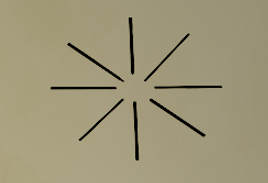
Os Pontos (Motes)
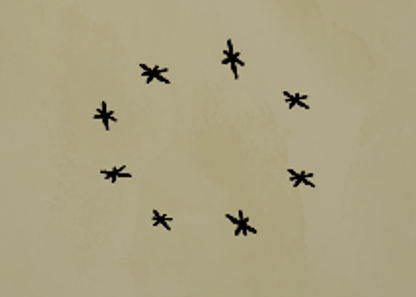
A Borda (Border)
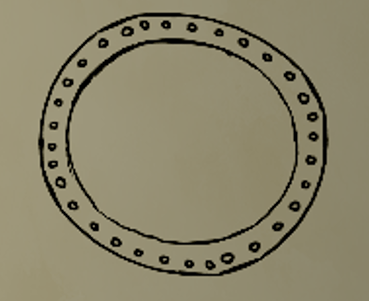
1. O NÚCLEO
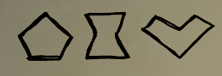
No centro de cada sigilo há uma forma única, diferente para cada reino. Se o núcleo nos dá um nome, o restante do sigilo nos conta a história por trás desse nome.
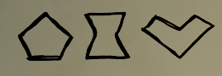
Ainda assim, é importante saber identificar e distinguir o núcleo como primeiro passo na decifração de qualquer sigilo, pois todas as outras partes são irrelevantes se não soubermos primeiro qual lugar está sendo descrito.
Exemplos de núcleos retirados de sigilos conhecidos:
Orinda Aries:

Fenn Aries:

Eraja:

Corarica:

Arch Aries:

2. OS RAIOS

Partindo do núcleo, surgem diversas linhas divisórias que se espalham, dividindo o sigilo em partes. De um sigilo para outro, os raios podem variar em número, estilo e forma. Estudar essas diferenças revela de imediato várias informações sobre o reino.
TRANSPORTE (número de raios)
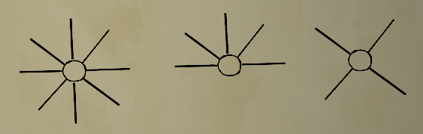
Contar o número de linhas divisórias em um sigilo nos revelará qual método de transporte era predominante no reino. Seria um reino costeiro que dependia de navios ou um domínio desértico que talvez utilizasse camelos para atravessar a vasta extensão arenosa de suas terras?
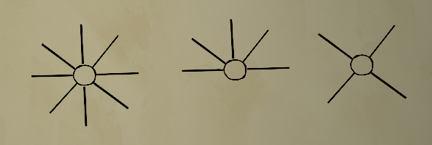
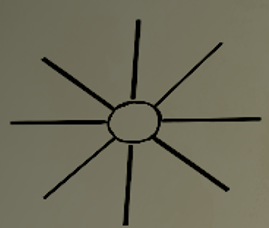
Capacidade naval. Rotas marítimas. Portos. Os oito raios desse sigilo lembram as direções de uma rosa dos ventos:
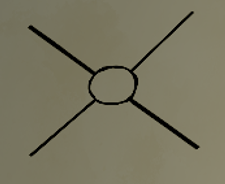
Estradas. Ruas. Carruagens, Os quatro raios aqui se parecem com encruzilhadas em um mapa:
A cavalo. Trilhas acidentadas. Outro sigilo que utiliza quatro raios, porém, estes sempre serão configurados de modo a sugerir um cavalo galopando:

Sistema ferroviário. Locomoção. Os três raios aqui são usados em sigilos de reinos que dependem de viagens sobre trilhos:
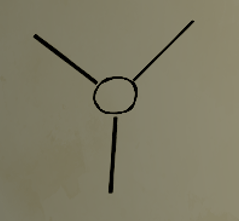
Aviação. Dirigíveis. Balões. Os cinco raios aqui sugerem deslocamento “acima” do horizonte:
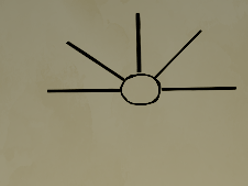
Camelos. Mulas de carga. Trilhas áridas ou desérticas. Dois raios para indicar um terreno plano:
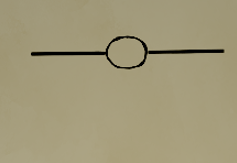
Viagem em casco de tartaruga. Cinco raios curtos que não se estendem completamente do núcleo até a borda:
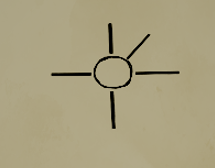
CLIMA (estilo do raio)
O estilo dos raios revela o clima predominante do reino:
Linhas pretas retas indicam ausência de clima incomum ou severo e temperaturas normais:
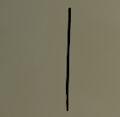
Tempo com neblina ou névoa é indicado quando o raio possui vários traços horizontais em um dos lados:

Linhas onduladas são usadas para indicar calor extremo. O ar escaldante e o sol abrasador fazem com que os raios, normalmente retos, pareçam trêmulos:
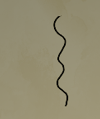
Um reino chuvoso é indicado com raios compostos por três linhas verticais caindo:

Para um clima mais extremo, tempestuoso, usa-se um raio em forma de relâmpago serrilhado:
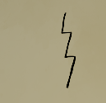
Um raio pontilhado com círculos em queda é usado para reinos mais frios, nos quais a neve é comum:

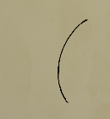
O vento forte é representado nos sigilos com o uso de linhas curvas dobradas, raios que se curvam sob ventos intensos:
3. PONTOS (MOTES)
Flutuando entre os raios estão pequenas figuras chamadas motes. A forma e estilo dos motes indicam o tipo de sociedade daquele reino, se era militarizada, artística, industrial, espiritual, etc.
Tribal — caçadores-coletores:

Agrícola — focada em colheitas e plantações:

Marcial — nação militarista com guerras duradouras:

Metropolitana — cidade grande, populosa, urbana:

Acadêmica — centros de conhecimento, universidades, escolas:
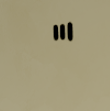
Industrial — foco em manufatura, invenções, produção:

Espiritual — reverência à natureza e forças místicas:

Poética — ênfase nas artes, literatura, música, linguagem:

4. A BORDA
Ao redor de cada sigilo há uma borda adornada que serve como contêiner para as informações contidas nele. Existem oito bordas diferentes, cada uma correspondendo a uma cor distinta. Essas bordas sempre correspondem à bandeira e às cores nacionais daquele reino específico.
BRANCA:
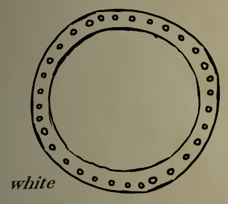
PRETA:
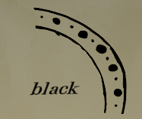
VIOLETA:
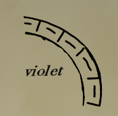
VERDE:
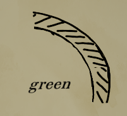
LARANJA
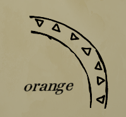
VERMELHA
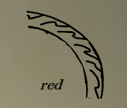
ROSA
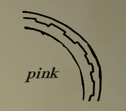
AMARELA
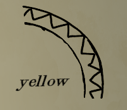
BRANCA
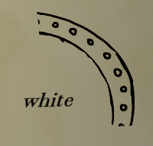
JUNTANDO TUDO
Ao estudar o núcleo, os raios, os motes e a borda de um sigilo, você agora deve ser capaz de desvendar o significado por trás do que antes era um enigma indecifrável.

Fenn Aries – O Grande Reino
Transporte: Estradas / Carruagens
Clima: Nebuloso
Sociedade: Militarista
Insígnia: Vermelha
TEXTO ORIGINAL
INTRODUCTION
When the scholars of the first era found any hidden things, either of a natural source or resulting from the creations of man, they were accustomed to record these in various signs with the aid of figures. They did this in order that the sigils of their realm might not be understood by strangers.
Historically speaking, sigils are not a new tradition. They have been found in every era and every culture and predate both written text and heraldic arts. However, today when we use the term “sigil” we are referring specifically to Realm Sigils, those crude circular marks of designation found on royal artifacts, buildings and older documents.
This book was written to make simple the understanding of these fascinating glyphs and to clearly display the correlation between each sigil and the iconography of that realm’s royal art. “How is the image of a leafless burning tree seen in geometric lines and what does that tell us of a Kingdom’s history?” Each line, each circle, and each variation tells a story of the land. Even the adorned borders around the sigils have special meaning.
THE SIGIL
To understand a Realm Sigil, we must first dismantle the symbol and identify the individual elements that make up the whole.
Each Sigil is composed of 4 things:
The Core
The Dividing Lines (Rays)
The Motes
The Border
1. THE CORE
At the center of each sigil is a unique shape, different for each realm. If the core gives us a name then the rest of the sigil tells us the history behind that name.
Still, it is important to be able to identify and distinguish the core as a first step in deciphering any sigil as all the other parts are meaningless if we don’t first know the place we are describing.
Several example cores taken from well known sigils.
Orinda Aries:
Fenn Aries
Eraja
Corarica
Arch Aries
2. THE RAYS
Spouting forth from the core will come several dividing lines, splitting the sigil into pieces. From one sigil to another, the rays will often differ in number, style and form. Studying the differences in these lines will immediately reveal several things about the realm.
TRANSPORTATION (the number of rays)
Counting the number of dividing lines in a sigil will reveal to us what method of transportation was prevalent in the realm. Were they a seaside kingdom that relied on ships or a desert domain that might have employed camels to cross the sandy expanse of their lands?
Naval capabilities. Ship routes. Seaports. The eight rays on these resemble the directions on a compass rose:
Roads. Streets. Carriages. The four rays here look like crossroads on a map:
Horseback. Rough trails. Another sigil that uses four rays, however, these will always be configured to suggest a horse galloping:

Train system. Locomotion. The three rays here are used in sigils for realms that rely on track based travel:

Aviation. Dirigibles. Balloons. The five rays here suggest travel “above” the horizon:
Camels. Pack mules. Arid or desert trails. Two rays to indicate a flat terrain:
Turtleback travel. Five short rays that do not fully extend from the core to the border:
WEATHER (the style of ray)
Identifying the style of the ray used in the sigil will show us what weather the kingdom considered native. Some are intuitive like the jagged lightning shaped lines to indicate stormy lands.
Straight black lines indicate a lack of unusual or harsh weather and normal temperatures:
FOGGY or misty weather is indicated when the ray has several horizontal slashes across one side:
Wavy lines are used to indicate extreme HEAT. The scorched air and blazing sun cause the otherwise straight rays to appear shimmering:
A RAINY realm is indicated with rays of three vertical lines pouring down:
For more extreme STORMY weather, a jagged lightning shaped ray is used:
A ray dotted with falling circles is used for colder realms in which SNOW is a common occurrence:
WINDY weather is displayed on sigils by the use of bent curved lines, rays buckling under the high winds:
3. MOTES
On each sigil, floating between the rays are small figures called motes. From the shape and style of the motes used on a sigil we can tell the type of society a given realm proclaimed, if they considered themselves mighty in arms or blessed by artistic and economic fortune.
Tribal – A primitive realm. Hunter and gatherers:
Agricultural – Harvest and farming based society and culture:
Martial – Militaristic nation engaging in generation spanning wars and heated arguments:
Metropolitan – Large city-state with a dense, urban and populous center:
Academic – A center for knowledge, advanced in various scholarly pursuits. These realms are home to many schools, universities and libraries:
Industrial – Engineering driven culture with a focus on manufacturing, invention and production:
Spiritual – An elevated reverence for nature, animals and the forces that guide us:
Poetic – A strong focus on the advancement of the arts, writing, music, and language:
4. THE BORDER
Around each sigil is an adorned edge serving as a container for the information within. There are eight different borders, each one corresponding to a different color. These border always correspond to the banner and national colors of that specific realm.
PUTTING IT ALL TOGETHER
By studying the core, rays, motes and border of the sigil, you should now be able to unlock the meaning behind what had previously been an undecipherable enigma.

Fenn Aries – The Grand Realm
Transportation: Road/Carriage
Weather: Foggy
Society: Militaristic
Banner: Red
RETORNAR
GAMES CINEMA FRANCÊS SOBRE CONTATOS
“Se este conteúdo foi útil para você, nos ajude se inscrevendo no nosso YouTube e/ou Instagram: @Euprofessor e @Eu.professor.”

 EuProfessor — Jogos, Cinema e Francês
Deixe um comentário